
Olympic boxing training is built as a holistic performance system, not a collection of isolated workouts. Every session — from early morning roadwork to technical sparring — is designed to serve one purpose: producing an athlete who can perform with speed, precision, endurance, and tactical clarity under strict rules and intense pressure.
Unlike professional boxing, where long-term damage accumulation and knockout power often dominate preparation, Olympic boxing focuses on round-by-round efficiency, clean scoring, and the ability to repeat peak performance multiple times during a tournament.
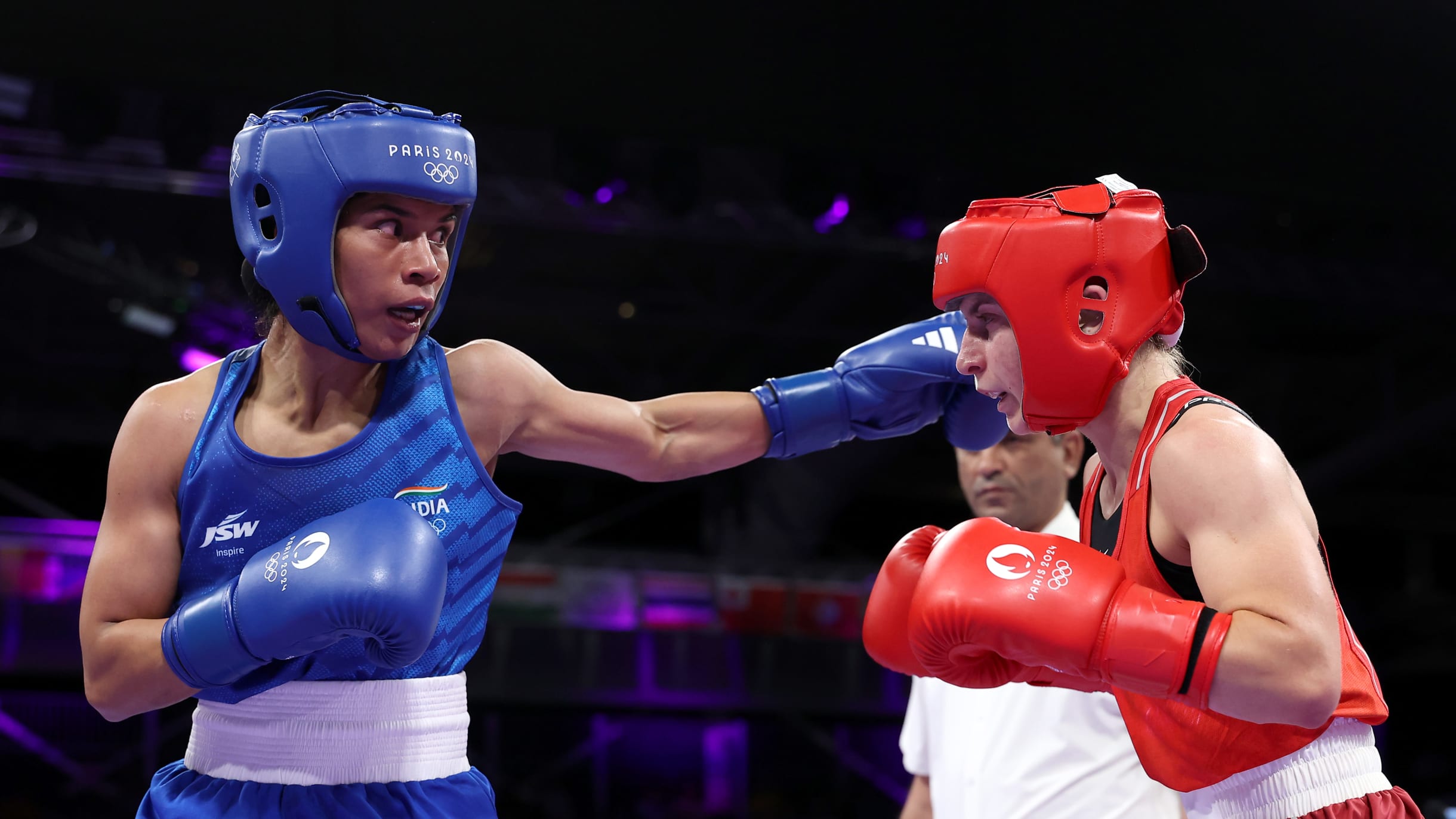
The Holistic Structure of Olympic Boxing Training
Olympic boxing combines physical conditioning, technical mastery, and tactical intelligence into a single integrated system. Training weeks are carefully structured to balance workload and recovery while reinforcing core fundamentals.
The foundation of the system includes roadwork for aerobic capacity, strength and conditioning for functional power, and daily technical skill development through bags, mitts, shadowboxing, and sparring. All of this work is performed with strict attention to footwork, balance, and correct execution of the fundamental punches — jab, cross, hook, and uppercut — delivered in intelligent combinations.
Every element exists to support performance inside three-minute rounds, where a single mistake can cost an entire bout.

Roadwork: Building the Aerobic Engine
Roadwork remains a cornerstone of Olympic boxing preparation. Early morning runs, typically around five miles, are used to build a deep aerobic base. This endurance allows boxers to recover quickly between exchanges, maintain footwork late in rounds, and compete multiple times during tournament formats.
Rather than slow jogging alone, Olympic roadwork often includes tempo runs, interval sprints, and varied terrain to simulate changes in pace experienced during competition. The goal is not just stamina, but the ability to recover while moving.
Strength and Conditioning: Functional Power and Stability
Strength training in Olympic boxing is designed to support punching mechanics and injury prevention rather than muscle size.
Bodyweight exercises such as push-ups, dips, squats, and sit-ups form the core of conditioning programs, building muscular endurance and joint stability. These are often combined with functional weight training to develop explosive leg drive, rotational core strength, and wrist and shoulder resilience.
Every movement is linked back to boxing mechanics. Power must transfer smoothly from the ground, through the hips, and into the hands without tension or energy leakage.
Technical Skill Development: Precision Over Force
Technical work is performed daily and remains the heart of Olympic boxing training.
Heavy bag work is used to refine punching mechanics and controlled power. Fighters focus on balance, correct alignment, and immediate recovery after each punch rather than raw force.
Mitt work with a coach develops reaction time, accuracy, combination flow, and defensive responsibility. Each sequence reinforces decision-making under speed, simulating scoring opportunities rather than brawling exchanges.
Speed bag training improves rhythm, timing, and hand-eye coordination, while shadowboxing allows athletes to visualize movement patterns, defensive reactions, and tactical scenarios. Shadowboxing is where footwork, balance, and mental rehearsal come together.
Sparring remains essential, but it is typically technical rather than punishing. The emphasis is on applying specific skills in realistic conditions, not on winning rounds through damage. This preserves longevity while sharpening competition readiness.
Olympic-Specific Competition Structure
Olympic boxing operates within a clearly defined framework that shapes every aspect of training.
Bouts are typically contested over three rounds of three minutes. Within this short format, efficiency is critical. There is little time to recover from mistakes, and pacing must be exact.
Scoring uses the 10-point must system, with judges awarding points based on clean, effective punches, tactical dominance, and ring control. Unlike earlier computerized punch-counting systems, modern Olympic scoring rewards rhythm control and technical superiority rather than sheer volume.
Equipment regulations also influence preparation. Boxers wear competition vests, and headguards are used in women’s boxing, while senior men compete without head protection. Training reflects these conditions closely to ensure competition realism.
Training Philosophy: Consistency and Adaptability
Olympic boxing training relies on disciplined daily structure. Conditioning, technical work, and recovery are repeated consistently over years, not weeks. This repetition builds reliable performance under pressure.
At the same time, training is highly adaptable. Coaches adjust focus based on upcoming opponents, competition schedules, and individual athlete needs. Emphasis may shift toward footwork, counterpunching, or endurance depending on tactical requirements.
Mental fortitude is developed alongside physical preparation. Athletes learn to remain composed, analytical, and responsive regardless of external pressure.
Scoring System and Technical Criteria
Modern Olympic judging places strong emphasis on quality over quantity. Judges look for clean blows landed with the knuckle portion of the glove on valid target areas, combined with effective aggression and tactical control of the ring.
Defensive responsibility plays a major role. Fighters who land clean punches and immediately reposition, avoiding counters, are rewarded more consistently than those who trade unnecessarily.
Technical fouls and warnings can heavily influence outcomes. Infractions such as holding, leaning, or low blows often result in point deductions that are difficult to recover from in a short contest. Discipline in posture, guard position, and composure is essential, as even the appearance of being overwhelmed can sway judges in closely contested rounds.
A classic example of scoring mastery is the “stick and move” approach. A clean jab followed by an immediate pivot not only secures a scoring blow but also demonstrates defensive awareness and ring control — both highly valued criteria.
Physiological Demands of Tournament Boxing
Olympic boxers must be prepared to compete repeatedly over a two-week tournament. This requires exceptional aerobic capacity for recovery between bouts and high-level anaerobic power for winning individual exchanges.
Training programs typically include interval sprinting, plyometric exercises, and thousands of repetitions of fundamental combinations to maintain sharpness under fatigue.
Mental preparation is equally demanding. Athletes often work with sports psychologists to develop visualization, breathing control, and focus strategies. Remaining present — focused on the next action rather than the outcome — allows boxers to perform calmly even when representing their country on the world stage.
Elite Olympic boxers distinguish themselves by maintaining speed and precision in the final round, when fatigue compromises most athletes. This ability is developed through years of consistent high-intensity training and disciplined recovery practices such as mobility work, active stretching, and cold exposure.
Olympic Methods in Modern Gyms
Olympic boxing methodologies are not limited to national teams. Their principles can be applied effectively in structured training environments that prioritize technical development, conditioning, and intelligent sparring.
At Blegend Gym, elements of Olympic boxing training are incorporated into regular boxing sessions. Athletes work on footwork, precise pad work, endurance-based rounds, and controlled sparring to build strong fundamentals that translate across all levels of competition.
Olympic Boxing vs Professional Boxing Training
Olympic boxing focuses on clean scoring, high-volume output, constant movement, and technical discipline.
Professional boxing places more emphasis on damage, power development, and long-term strategic pacing.
Many elite professionals retain Olympic-style training methods throughout their careers because of their efficiency and longevity benefits.
Fighters such as Vasyl Lomachenko, Oleksandr Usyk, and Dmitry Bivol demonstrate how Olympic fundamentals translate successfully to the professional level.
Final Thoughts
Olympic boxing training is not about shortcuts. It is about mastery of movement, technical clarity, and physical and mental endurance.
For athletes who value consistency, intelligence, and longevity in the ring, Olympic training methodologies remain one of the most effective systems ever developed.