
A technical, efficient approach built for long-term dominance
Certain boxing styles become inseparable from the fighters who perfect them. Over time, these approaches stop being just “methods” and turn into identities.
When people say peek-a-boo, they think of Mike Tyson.
When they say Mexican pressure style, Julio Cesar Chavez Sr. comes to mind.
When someone mentions the shoulder roll, it’s impossible not to think of Floyd Mayweather Jr..
In modern boxing, the name Dmitry Bivol is now closely associated with what many call the Soviet style — a calm, mobile, highly efficient way of boxing that prioritizes control, balance, and precision over raw aggression.

What Is the Soviet Boxing Style?
The Soviet boxing style is not built around knockouts or brawling exchanges. It is based on movement economy, tactical discipline, and consistency over long fights.
This system was developed in the mid-20th century by the Soviet sports institutes, where boxing was treated as a science rather than entertainment. Training programs were built on:
- Biomechanics
- Physics of movement
- Psychology and decision-making
- Energy efficiency
The goal was simple: win rounds, not moments.
This philosophy shaped generations of elite amateur fighters and later transitioned successfully into professional boxing through athletes like Bivol.
Why Dmitry Bivol’s Style Works So Well
Bivol’s boxing does not look flashy at first glance — and that is exactly why it works.
His style is:
- Fluid rather than explosive
- Controlled rather than reactive
- Consistent from round one to twelve
Instead of chasing knockouts, Bivol breaks opponents down mentally and physically by:
- Staying perfectly balanced
- Constantly repositioning
- Landing clean punches while denying counters
This is textbook Soviet boxing adapted to the modern professional game.

Key Characteristics of Bivol’s Soviet Style
1. Upright, Mobile Stance
Unlike heavily crouched or squared stances, Bivol stays relatively upright with his weight evenly distributed. This allows:
- Quick lateral movement
- Immediate pivots after punching
- Faster defensive recovery
- Mobility always comes before power.
2. Relaxed Upper Body
One of the most noticeable features of Bivol’s boxing is how relaxed his shoulders and arms remain during exchanges.
This relaxation:
- Reduces energy waste
- Improves punch speed
- Allows smoother combinations
Tension is the enemy of endurance.
3. Soft Knees and Constant Readiness
Bivol never locks his legs. His knees stay slightly bent, allowing him to:
- Push off instantly
- Adjust range after every punch
- Defend immediately after attacking
- Every punch assumes a counter is coming.
4. Power Generated From the Legs
In the Soviet system, punches do not start with the arms — they start with the legs.
Force travels:
Feet → legs → hips → torso → shoulders → fists
This is why Bivol’s punches look controlled but still land with authority.
5. Punching While Moving
A defining feature of this style is the ability to throw accurate punches without planting the feet.
This allows:
- Continuous pressure without overcommitting
- Safe scoring from angles
- Dominance of ring space
Movement and offense are not separated — they are connected.
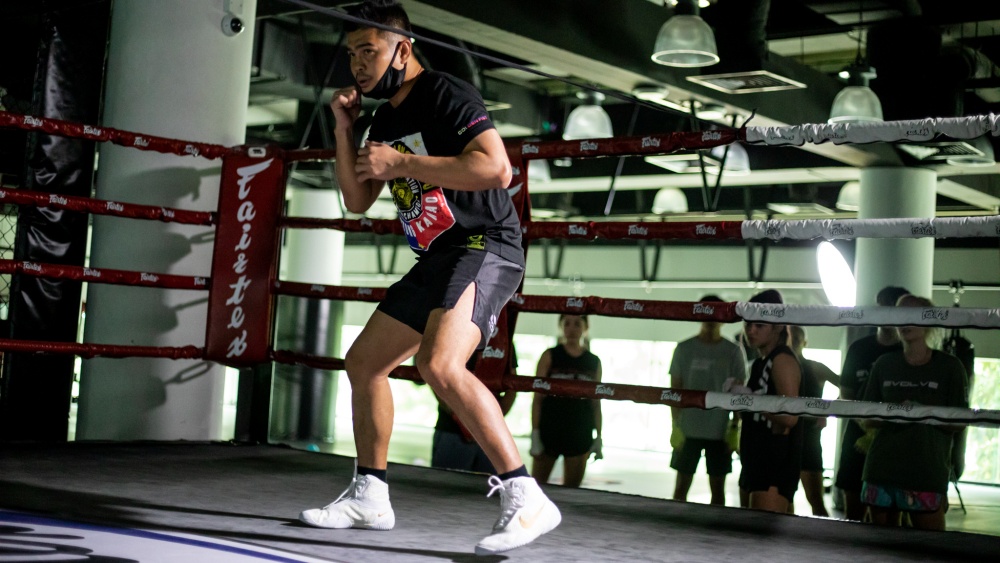
Conditioning: The Hidden Requirement
This style is deceptive. It looks calm, but it is physically demanding.
Because you are constantly:
- Moving laterally
- Resetting stance
- Staying mentally focused
Your cardiovascular conditioning must be strong. Without endurance, the style collapses.
This is why Soviet-style fighters place huge emphasis on:
- Roadwork
- Aerobic conditioning
- Long technical rounds
Can This Style Be Learned?
Yes — but not overnight.
The Soviet style is built through:
- Years of technical repetition
- Footwork-focused training
- Sparring that prioritizes control, not damage
It is best developed in environments where movement, defense, and ring intelligence are emphasized alongside conditioning.
At Blegend Gym, fighters and hobbyists alike are taught these principles through structured pad work, footwork drills, and controlled sparring — helping athletes build efficient, sustainable boxing foundations rather than relying on raw power.
Common Mistakes When Trying to Copy Bivol
- Standing too upright without knee engagement
- Moving without purpose
- Throwing combinations without defensive exits
- Forgetting conditioning requirements
The style looks simple, but every detail matters.
Final Thoughts
Dmitry Bivol’s Soviet style is not about being aggressive or passive — it is about being economical.
It rewards:
Patience
Discipline
Technical understanding
For fighters who value longevity, consistency, and control, this approach offers a blueprint that remains effective at the highest level of boxing.